|
|
|
1.
|
What causes NH3 to have it’s shape, according to VSEPR
theory?
a. | repulsive forces between unshared pairs of electrons and bonds | b. | the unusual location
of the free electrons | c. | interaction between the fixed orbitals of the
unshared pairs of hydrogen | d. | ionic attraction and
repulsion |
|
|
|
2.
|
How many moles of CH4 are contained in 96.0 grams of
CH4?
a. | 3.00 moles | c. | 6.00 moles | b. | 12.0 moles | d. | 16.0 moles |
|
|
|
3.
|
Which type of bond is formed by the transfer of electrons from one atom to
another?
a. | a covalent bond | c. | a coordinate covalent bond | b. | an ionic
bond | d. | a hydrogen
bond |
|
|
|
4.
|
What is the name of the compound whose formula is
H2SO4?
a. | sulfuric acid | c. | hydrosulfurous acid | b. | sulfurous acid | d. | hydrosulfuric
acid |
|
|
|
5.
|
Which statement describes a chemical property of iron?
a. | Iron combines with oxygen to form rust. | b. | Iron conducts
electricity and heat. | c. | Iron can be drawn into a
wire. | d. | Iron can be flattened into sheets. |
|
|
|
6.
|
Which of the following is an example of a physical change?
a. | breaking glass | c. | burning gasoline | b. | rusting of iron | d. | lighting a match
|
|
|
|
7.
|
What is the total number of electrons present in an atom of  ?
|
|
|
8.
|
The gram molecular mass of Ca3(PO4)2 is
a. | 279 g | b. | 342 g | c. | 246 g | d. | 310
g |
|
|
|
9.
|
Which group contains elements with a total of four electrons in the outermost
energy level (valence shell)?
a. | Group 1A | b. | Group 2A | c. | Group 6A | d. | Group
4A |
|
|
|
10.
|
Given the unbalanced
equation:
What is the coefficient in front of the CaSO4 when the equation is completely balanced with
the smallest whole-number coefficients?
|
|
|
11.
|
Which of the following factors contributes to the increase in atomic size within
a group in the periodic table as the atomic number increases?
a. | an increase in number of protons | b. | an increase in size of the
nucleus | c. | fewer electrons in the highest occupied energy level | d. | more shielding of
the electrons in the highest occupied energy level |
|
|
|
12.
|
A person attemps to fill their car tires with 9.03x10²³ molecules of
nitrogen gas (N2). How many moles did the person attempt to put in the tires?
a. | 1.50 moles | c. | 0.667 moles | b. | 42.0 moles | d. | 33.6 moles |
|
|
|
13.
|
Which of the following is a correct Lewis dot structure for potassium
chloride?
|
|
|
14.
|
4K(s) + O2(g)  2K2O(s) 2K2O(s)
Under certain conditions potassium can react with oxygen in air to form
potassium oxide according to the above equation. Which image best represents the amount of
potassium required to completely react with all of the oxygen shown in the flask
below?
|
|
|
15.
|
A red light is measured to have a wavelength of 6.71 x 10⁻⁷ m. Given
the speed of light (3.00 x 10⁸ m/s) and Planck’s constant (6.63 x 10⁻³⁴
Js), calculate the energy of one photon of this light.
a. | 4.42 x 10⁻³ J | c. | 2.96 x 10⁻¹⁹
J | b. | 1.33 x 10⁻¹⁸ J | d. | 1.48 x 10⁻¹⁸ J |
|
|
|
16.
|
Which of the following elements has the smallest atomic radius?
|
|
|
17.
|
Given the balanced
equation:
AgNO3 + NaCl  NaNO3 +
AgCl NaNO3 +
AgCl
Which compound would
precipitate out of the reaction?
a. | NaNO3 | c. | NaCl | b. | AgCl | d. | AgNO3
|
|
|
|
18.
|
A solution containing a large
concentration of dissolved ions can be classified as a(n) ________.
a. | weak
solution | c. | suspension | b. | Strong electrolyte | d. | Solvent |
|
|
|
19.
|
The solid block shown here has a mass of 146 grams. What is the
block’s density? a. | 8.1 g/cm3 | c. | 54 g/cm3 | b. | 2.7 g/cm3 | d. | 0.37
g/cm3 |
|
|
|
20.
|
When 20 mL of 1.0 M HCl is
diluted to a total volume of 60 mL, the concentration of the resulting solution is
a. | 0.50 M | b. | 1.0 M | c. | 0.25 M | d. | 0.33 M |
|
|
|
21.
|
According to the
Brønsted-Lowry definition, an acid is any species that can
a. | accept an
electron | c. | accept a
proton | b. | donate a proton | d. | donate an electron |
|
|
|
22.
|
Which orbital notation shows the lowest energy arrangement of valence electrons
for 1s22s22p3?
|
|
|
23.
|
Which of the following atoms has six valence electrons?
a. | argon (Ar) | c. | sulfur (S) | b. | magnesium (Mg) | d. | silicon (Si) |
|
|
|
24.
|
A monochromatic beam of light has a frequency of 7.69 x 10¹⁴ Hz
(hertz). What is the energy of a photon of this light?
a. | 3.90 x 10⁻⁷ J | c. | 2.59 x 10-40
J | b. | 5.10 x 10⁻¹⁹ J | d. | 6.92 x 10⁻³¹ J |
|
|
|
25.
|
An atom of lithium-7 has an equal number of
a. | electrons and neutrons | c. | positrons and neutrons | b. | electrons and
protons | d. | positrons and
protons |
|
|
|
26.
|
If 75.0 % of the isotope of an element have a mass of 35.0 amu and 25.0 % of the
isotopes have a mass of 37.0 amu, what is the average atomic mass of the element?
a. | 37.0 amu | b. | 35.5 amu | c. | 36.0 amu | d. | 35.0 amu
|
|
|
|
27.
|
What is the molarity of a KF
(aq) solution containing 116 g of KF in 1.00 L of solution?
a. | 3.00 M | b. | 4.00 M | c. | 2.00 M | d. | 1.00 M |
|
|
|
28.
|
What is the pH of a 0.01 M
solution of KOH?
|
|
|
29.
|
Sulfur dioxide is the cause of acid rain and is common pollutant caused by
volcanic eruptions, the burning of fossil fuels, and the exhaust from industrial facilities.
What is the mass in gram of 0.75 mole of SO2? (MM: 64.07 g/mol)
|
|
|
30.
|
What is the mass number of an ion that has 83 protons, 80 electrons, and 126
neutrons?
|
|
|
31.
|
In a solution, litmus paper
turned blue. The pH of this solution could be
|
|
|
32.
|
Which of the following elements has an electron configuration of
1s22s22p63s23p1?
a. | aluminum | c. | lithium | b. | phosphorous | d. | calcium |
|
|
|
33.
|
Logan is studying a substance. Which property of the substance is
chemical?
a. | its density | c. | its melting point | b. | its flammability | d. | its temperature |
|
|
|
34.
|
When the
reaction
is completely balanced using smallest whole numbers, the coefficient of
H2O will
be
|
|
|
35.
|
Chemical equations must be balanced to satisfy
a. | the law of definite proportions. | b. | the law of multiple
proportions. | c. | Avogadro’s principle. | d. | the law of conservation of
mass. |
|
|
|
36.
|
What is the percent mass oxygen in acetone (C3H6O)?
a. | 27.6 % | b. | 1.00 % | c. | 10.3 % | d. | 62.0
% |
|
|
|
37.
|
Sodium, mercury, argon and neon are used in the production of lamps. There are
fewer safety guidelines regarding the handling of neon and argon than for mercury and sodium. Which
of the following best describes the properties of elements in the same family as neon and
argon?
a. | Solid at room temperature and mostly unreactive with strong acids | c. | Solid at room
temperature | b. | Mostly unreactive | d. | Gaseous at room temperature and highly reactive |
|
|
|
38.
|
The H3O+ ion concentration of a solution
is 1 x 10⁻⁴ M. This solution is
a. | acidic and has a pH of
4 | c. | basic and has a pH of
4 | b. | acidic and has a pH of
10 | d. | basic and has a pH of
10 |
|
|
|
39.
|
Which set of procedures and observations indicates a chemical change
a. | Ethanol is added to an empty beaker and the ethanol eventually
disappears. | b. | A solid is gently heated in a crucible and the solid slowly turns to liquid.
| c. | Large crystals are crushed with a mortar and pestle and become
powder. | d. | A cool, shiny metal is added to water in a beaker and rapid bubbling
occurs. |
|
|
|
40.
|
Metallic bonds occur between atoms of
a. | neon | b. | copper | c. | fluorine | d. | sulfur |
|
|
|
41.
|
According to the Arrhenius definition, a substance that is classified as an acid
will always produce _______ in solution
a. | I-(aq) | b. | K+(aq) | c. | H+(aq) | d. | F-(aq) |
|
|
|
42.
|
Which graph shows the
pressure-temperature realationship expected for an ideal gas?
|
|
|
43.
|
1s22s22p63s23p64s1
is the electron configuration for which element?
a. | calcium (Ca) | c. | argon (Ar) | b. | potassium (K) | d. | aluminum (Al) |
|
|
|
44.
|
Which equation represents a
neutralization reaction?
a. | CaO(s) + H2O(l)  Ca(OH)2(aq) Ca(OH)2(aq) | b. | H2SO4(aq) + CaCO3(aq)  CaSO4(aq) + H2O(l)
+CO2(g)
CaSO4(aq) + H2O(l)
+CO2(g) | c. | HNO3(aq) + KOH(aq)  KNO3(aq) +
H2O(l) KNO3(aq) +
H2O(l) | d. | 2 HCl(aq) + Zn(s)  ZnCl2(aq) + H2(g)
 |
|
|
|
45.
|
As wavelength increases, what happens to Frequency and Energy?
a. | Frequency decreases, Energy increases | c. | Both Increase | b. | Both
Decrease | d. | Frequency
increases, Energy decreases |
|
|
|
46.
|
Given a pH of 3.8, which of the
following is true?
a. | can be neutralized by a strong
acid | c. | contains more H+ ions than
OH- | b. | has a slightly basic pH | d. | Contains more OH- ions than H+
ions |
|
|
|
47.
|
Which of the following quantum leaps of an electron would be associated with the
greatest energy of emitted light?
a. | Energy Level= 6 to 5 | b. | Energy Level = 4 to 5 | c. | Energy Level =
5 to 2 | d. | Energy Level = 5 to 1 |
|
|
|
48.
|
An atom is electrically neutral because the
a. | number of protons equals the nubmer of electrons. | b. | ratio of the number
of neutrons to the number of electrons is 1:1. | c. | ratio of the number of neutrons to the number
of protons is 2:1. | d. | number of protons equals the number of
neutrons. |
|
|
|
49.
|
What is the Lewis dot structure for nitogen trifluoride (NF3)
|
|
|
50.
|
What is the total number of molecules in 1.0 mole of Cl2 (g)?
a. | 35 | c. | 70 | b. | 6.02 x 10²³ | d. | 12 x
1024 |
|
|
|
51.
|
Which is the correct name of the compound with the formula
NH4NO2?
a. | ammonia nitrite | c. | ammonium nitrite | b. | ammonia nitrate | d. | ammonium
nitrate |
|
|
|
52.
|
The bonds present in nitrogen dioxide (NO2) are
a. | ionic | c. | metallic | b. | covalent | d. | van der Waals |
|
|
|
53.
|
Carbon reacts with chlorine to form CCl4. What is the name of
this compound?
a. | carbon 4-chloride | c. | carbon tetrachloride | b. | tetracarbon chloride | d. | 1-carbon
4-chloride |
|
|
|
54.
|
In the
reaction
an acid-base conjugate pair is
|
|
|
55.
|
Given the
reaction:
How many moles of CO2 are produced when 11.2 liters of C8H16 gas, measured
at STP, reacts completely?
a. | 4.00
mole | b. | 8.00
moles | c. | 30.0
mole | d. | 10.0
moles |
|
|
|
56.
|
Which kind of bond is formed when two atoms share electrons to form a
molecule?
a. | metallic | b. | covalent | c. | ionic | d. | electovalent |
|
|
|
57.
|
Which temperature is the same
as -13 °C?
a. | 773 K | b. | 286 K | c. | 747 K | d. | 260 K |
|
|
|
58.
|
Orange light has a frequency of 5.0 x 10¹⁴ Hz (hertz) in a
vaccuum. What is the wavelength of this light?
a. | 1.5 x 10²³ m | c. | 1.7 x 10⁶
m | b. | 2.0 x 10⁻¹⁵ m | d. | 6.0 x 10- 7 m |
|
|
|
59.
|
Which of the following models best represents the shape of a compound
with trigonal planar geometry?
|
|
|
60.
|
One of the wavelengths emitted by hydrogen atoms is
6.56 x 10⁻⁷ m. Calculate
the frequency if the speed of light is 3.00 x 10⁸ m/s..
a. | 4.57 x 10⁻⁶ Hz | c. | 1.97 x 10¹⁴
Hz | b. | 4.57 x 10⁻⁷ Hz | d. | 4.57 x 10¹⁴ Hz |
|
|
|
61.
|
Which pair of elements form an ionic bond with each other?
|
|
|
62.
|
What is the maximum number of orbitals in the p sublevel?
|
|
|
63.
|
Ethanol (C2H5OH) is used in hand sanatizer. If 115
grams of C2H5OH is used to to make a batch of hand sanatizer, then how many
moles are present in the batch? (MM: 46.08 g/mol)
a. | 1.00 mol | c. | 2.50 mol | b. | 3.00 mol | d. | 1.50 mol |
|
|
|
64.
|
Given the
reaction:
How many moles of C6H12O6 (s) are needed to produce 24 moles of carbon
dioxide?
a. | 4.0
moles | b. | 12
moles | c. | 1.0
mole | d. | 24
moles |
|
|
|
65.
|
What formula represents lead (II) phosphate?
a. | Pb3(PO4)2 | c. | Pb2(PO4)3 | b. | Pb4PO4 | d. | PbPO4 |
|
|
|
66.
|
Which of the following atoms have the largest atomic radius?
a. | magnesium (Mg) | c. | chlorine (Cl) | b. | iodine (I) | d. | barium (Ba) |
|
|
|
67.
|
The reaction for the
decomposition of PCl5 to
chlorine and PCl3 is shown below.
PCl5(g)  PCl3(g) +
Cl2(g) PCl3(g) +
Cl2(g)
If the
equilibrium concentrations are [PCl5] = 1.0 M, [PCl3] = 0.10 M,
[Cl2] = 0.10 M, what is the value of the equilibrium constant?
a. | 1.0 x 10⁻⁴ | c. | 1.0 x 10² | b. | 2.0 x 10⁻² | d. | 1.0 x 10⁻² |
|
|
|
68.
|
Which sample of matter is a pure substance?
a. | ammonia gas (NH3) | c. | air (O2, N2,
CO2) | b. | salt water (NaCl + H2O) | d. | hydrochloric acid solution (HCl +
H2O) |
|
|
|
69.
|
Beryllium is classified as
a. | a transition metal | c. | an alkali metal | b. | a noble gas | d. | an alkaline earth
metal |
|
|
|
70.
|
What is the name for the compound FeS
a. | iron (II) sulfide | c. | iron (II) sulfate | b. | iron (III) sulfide | d. | iron (III)
sulfate |
|
|
|
71.
|
What trend can be seen as the atomic number increases in period 3?
a. | increasing electronegativity | c. | decreasing atomic
mass | b. | decreasing first ionization energy | d. | increasing atomic radius
|
|
|
|
72.
|
Which of the following atoms has a smallest atomic radius?
|
|
|
73.
|
A neon sign is being made with 80 grams of neon. How many atoms are
contained the neon sign?
a. | 2.40 x 1024 atoms | c. | 4.80 x 1024
atoms | b. | 1.20 x 1024 atoms | d. | 6.02 x 10²³
atoms |
|
|
|
74.
|
In theory, how many grams of
H2O can be produced if an
experiment used 12.75 grams of sulfur dioxide and 3.96 grams of hydrosulfuric acid? (MM
H2S = 34.082 g/mol ; MM SO2 = 64.064 g/mol; MM H2O = 18.015 g/mol
)
2
H2S (g) +
SO2 (g)  3 S (g) + 2 H2O
(g) 3 S (g) + 2 H2O
(g)
a. | 1.50
grams | c. | 1.98
grams | b. | 7.17 grams | d. | 3.96 grams |
|
|
|
75.
|
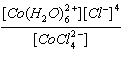
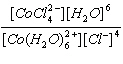
Co(H2O)62+(aq) + 4
Cl-(aq)  CoCl42-(aq) + 6
H2O(l) CoCl42-(aq) + 6
H2O(l)
Write the Keq expression of the reaction
above
a. | Keq = 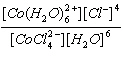 | c. | Keq
=  | b. | Keq = 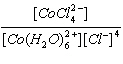 | d. | Keq
=  |
|
|
|
76.
|
The covalent bonds in water are
polar because
a. | O is more electronegative than
H. | c. | O and H are equally
electronegative. | b. | H is more electronegative than O. | d. | water molecules are cohesive. |
|
|
|
77.
|
Which element within any given period of the Periodic Table would always have
the lowest first ionization energy?
a. | a halogen | c. | an alkali metal | b. | a noble gas | d. | an alkaline earth metal
|
|
|
|
78.
|
What is the formula mass of calcium nitrate,
Ca(NO3)2?
a. | 150 g | c. | 102 g | b. | 70.0 g | d. | 164 g |
|
|
|
79.
|
Which subatomic particles are located in the nucleus of a neon atom?
a. | electrons and protons | c. | electrons and neutrons | b. | protons and
electrons | d. | protons and
neutrons |
|
|
|
80.
|
The correct formula for sodium oxide is
|
|
|
81.
|
Which atom contains exactly 15 protons?
a. | nitrogen-15 | c. | oxygen-15 | b. | phosphorous-32 | d. | sulfur-32 |
|